Concrete driveways are a durable and popular choice for homeowners, but various weather conditions can significantly impact their longevity. Understanding how different types of weather affect concrete can help you take proactive steps to protect your driveway. This guide highlights the effects of various weather conditions, such as freezing, heat, and moisture, on concrete driveways and offers practical tips to minimize damage.
Impact of Freezing Temperatures
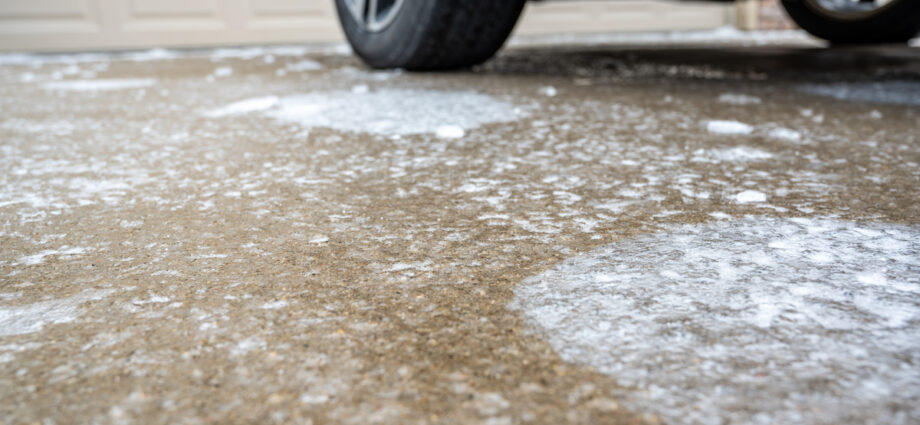
One of the most damaging weather conditions for concrete driveways is freezing temperatures. When the temperature drops, concrete contracts, creating stress within the material. Repeated freezing and thawing cycles lead to cracking and surface degradation.
Using harsh de-icing salts further exacerbates this issue. These salts may help melt ice and snow, but they also penetrate the concrete’s porous surface, increasing the risk of expansion during freezing. This accelerates the deterioration process, leaving your driveway more prone to cracks and scaling.
Effects of Heat and Sunlight
High temperatures and constant exposure to sunlight can also take a toll on concrete driveways. Heat causes concrete to expand, which creates internal stress and can lead to hairline cracks. Over time, these small cracks may become larger and compromise the surface’s structural integrity.
Sunlight also affects the appearance of your driveway. Intense UV rays can cause the concrete’s color to fade, leaving it looking dull and worn. This fading may be particularly noticeable on driveways treated with certain sealers or pigments.
The Role of Moisture and Rain
Moisture is another significant factor contributing to driveway damage. Rainwater can penetrate the concrete’s surface, seep into its pores, and weaken the material over time. Additionally, standing water on the driveway can erode the concrete, especially with insufficient drainage.
Proper drainage is essential for minimizing water-related issues. A well-designed driveway that channels rainwater away from the surface can help reduce pooling and prevent erosion over time. For driveways that are already showing signs of unevenness or damage, concrete raising can revitalize your driveway and prolong its lifespan by restoring a level surface.
Protecting Your Concrete Driveway
Understanding these weather-related risks is the first step toward protecting your concrete driveway. To maintain its longevity, consider sealing the surface to prevent water penetration, avoiding de-icing salts, and ensuring proper drainage. Regular maintenance and timely repairs can go a long way in preserving your driveway’s structural integrity and visual appeal.
Concrete driveways are a durable option, but they are not impervious to weather’s effects. By understanding how weather affects concrete and taking proactive steps, you can minimize damage and keep your driveway in excellent condition for years to come.
Check out: Best Home Improvement Projects to Increase Home Value