Police officers use technology to communicate with their departments, document incidents, and respond to situations they encounter on duty. Some equipment supports everyday responsibilities, while other devices serve specialized purposes during investigations. If you’re curious about what types of technology police officers use and how these tools contribute to their work, here’s a closer look at the equipment you’ll find in modern law enforcement.
Body-Worn Cameras
Body-worn cameras record video from an officer’s perspective during encounters with the public. Officers generally attach these small devices to their uniforms, where the camera captures what’s happening directly in front of them.
The footage provides a record of interactions that departments can review when investigating complaints or examining how an incident unfolded. It can also preserve details that witnesses or officers don’t remember accurately afterward. However, cameras don’t capture everything happening around an officer. Their position and field of view limit what appears in the recording, so departments still consider other evidence when reviewing incidents.
Dashboard Cameras
Dashboard cameras record activity around police vehicles, particularly during traffic stops. Departments install these cameras inside patrol cars, with the lens generally facing through the windshield toward the road ahead.
When an officer pulls someone over, the camera documents the vehicle’s movements and the events occurring within its view. This footage allows departments to review what happened before an arrest or during a roadside confrontation. Some systems activate automatically when an officer turns on the vehicle’s emergency lights. As a result, recording can begin before the officer exits the patrol car.
Automatic License Plate Readers
Automatic license plate readers use specialized cameras and software to identify vehicle registration plates. Rather than requiring officers to manually enter every plate number, these systems process images and convert the characters into searchable information.
Departments compare the results against databases containing vehicles associated with specific law enforcement alerts. When the system identifies a potential match, it notifies officers so they can investigate further.
An alert doesn’t automatically establish that a vehicle or its driver is involved in criminal activity. Officers must verify the information before taking further action, since plate recognition systems occasionally produce incorrect matches.
Two-Way Radios
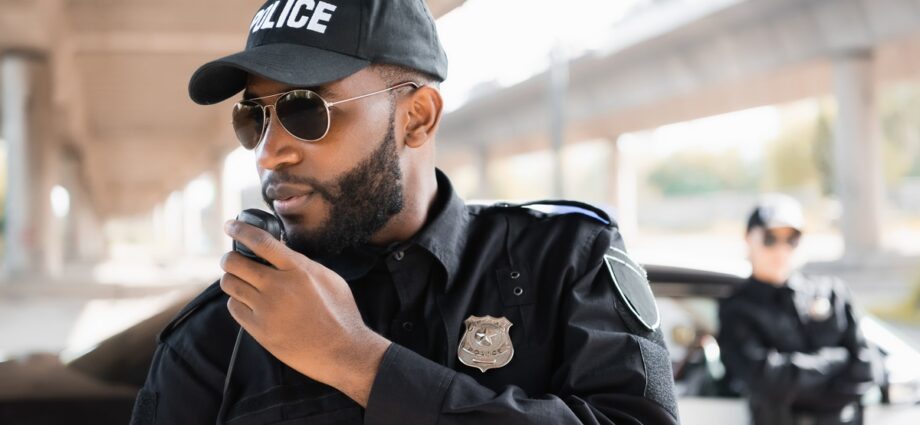
Two-way radios remain central to police communication because officers need immediate contact with dispatchers while working away from their vehicles. Portable radios allow them to exchange information without returning to the station or relying on a cellular phone.
During an emergency, an officer can request backup and communicate their location to dispatch. Other officers monitoring the same channel can receive updates as the situation develops.
Modern police radios may also use encrypted communications to restrict unauthorized listening. However, the availability of encryption depends on the department’s radio system and its policies governing communication channels.
Mobile Data Terminals
Mobile data terminals are computers installed inside police vehicles. They give officers access to department information while they’re on patrol, reducing the need to contact dispatch for every routine database inquiry.
For example, an officer investigating a traffic violation can enter a vehicle’s registration number and review available records from the patrol car. This allows them to examine relevant information before deciding what further investigation is necessary.
Terminals also display information about assigned calls, including updates from dispatchers. Because officers receive written information through the computer, radio channels remain available for more urgent communication.
Police Drones
Police departments use unmanned aerial vehicles, commonly called drones, to observe locations from above. These aircraft carry cameras that transmit footage to an operator on the ground. During a search for a missing person, a drone allows officers to examine terrain that would otherwise require a lengthy search on foot. The elevated view also allows operators to identify obstacles before ground personnel enter an area.
However, drone operations remain subject to aviation regulations and applicable privacy laws. Departments must account for these requirements when deciding where and how officers deploy the aircraft during an investigation.
Radar Speed Detection

Radar devices measure vehicle speed by transmitting radio waves toward moving traffic. When those waves reflect off a vehicle, changes in the returning signal allow the equipment to calculate its speed. Officers use radar during traffic enforcement to identify drivers traveling above posted speed limits. Some units operate from stationary patrol vehicles, while others allow measurements from moving police cars.
Accurate readings require appropriate operating procedures and an understanding of the equipment’s limitations. Officers must identify which vehicle produced the measurement, particularly when several vehicles are traveling through the radar’s detection area.
Fingerprint Scanners
Fingerprint scanners allow law enforcement personnel to capture fingerprint images electronically rather than relying exclusively on traditional ink impressions. The device records the fingerprint’s ridge details and converts them into a digital image.
Officers can submit these images to authorized identification systems for comparison against existing records. This process supports identity verification when someone has provided questionable identification or when investigators need to identify an individual in custody.
A potential fingerprint match still requires evaluation according to established procedures. The technology provides information for identification, but officers must confirm the result before relying on it.
Thermal Imaging Cameras
Thermal imaging cameras detect infrared radiation and produce images based on temperature differences. Police officers use this technology when ordinary cameras can’t provide adequate visibility. For instance, officers searching for a missing person at night may use a thermal camera to identify body heat against cooler surroundings. The equipment allows them to examine areas where darkness makes visual observation difficult.
However, thermal cameras don’t see through solid walls. Their performance also depends on environmental conditions because surrounding objects can influence the temperature contrast that the camera detects.
MOLLE Attachment Systems
MOLLE technology is a modular attachment system that allows officers to secure compatible equipment to their body armor carriers. It’s commonly used for customizing body armor carriers. The system uses rows of reinforced webbing that accommodate compatible pouches. Officers can position those pouches according to their assigned responsibilities and department regulations.
For example, an officer who frequently communicates with dispatch can attach a radio pouch where it’s accessible without reaching around their carrier. The webbing keeps the pouch securely attached during movement, so the officer can access the radio without worrying about it coming loose.
GPS Tracking Systems
GPS tracking technology allows police departments to determine the geographic position of equipped patrol vehicles. The system receives satellite signals to calculate location information, which authorized personnel can view through dispatch software.
When dispatchers receive an emergency call, vehicle location data allows them to identify patrol units near the incident. They can then coordinate assignments based on where officers are currently working.
GPS information also supports fleet management by documenting vehicle movements during a shift. However, location data doesn’t describe everything happening at a scene, so dispatchers still rely on communication with responding officers.
Technology in Modern Police Work
Police departments continue to adopt new equipment as technology develops. However, the devices officers use depend on their responsibilities and the resources available to their departments. Understanding what technology police officers use gives you a better idea of how they communicate, gather information, and respond to incidents. While the equipment varies, each tool supports a particular part of an officer’s work throughout their shift.
Check out: The Top 10 Dealdy Weapons In Uganda