A new report by Guttmacher Institute alongside its implementing partners has revealed some interesting data that indicated a positive response from Uganda’s health system when it came to delivering contraceptive services to adolescents during the Covid-19 pandemic.
The report also indicated that concerns still remain on whether the Ugandan government will be able to meet the demands of the growing population which is considered as one of the youngest in the world, with 78% of people younger than 30 and a half younger than 15. Therefore, it means that over the coming years, a growing proportion of the population will be sexually active and of reproductive age.
Despite the efforts from the Ugandan government in scaling up the use of modern family planning methods, the need for sexual and reproductive health services, including those related to HIV, will only continue to rise given the fact that the country’s population is dominated by young people.
In early 2020, much of the world found itself battling a deadly and quickly spreading virus known as Covid-19 which was later considered a pandemic that went on to disrupt many sectors such as travel, manufacturing, housing, health and many more.
When the first case of Covid-19 was reported in Uganda on March 21, 2020, the Ugandan government instituted a range of public health measures to restrict gatherings, in-school education, transportation and more.
Lockdowns were implemented in a phased manner, starting with the closure of schools and other academic institutions. Extra steps and measures were also taken by the government which included the ban on the use of public & private transport, and a nationwide nighttime curfew.
Pandemic-related restrictions made it difficult for both workers and patients to reach health facilities
The pandemic-related restrictions made it difficult for both workers and patients to reach health facilities. Fear of being at a health facility was widespread, and many believed these to be either closed or restricted to COVID care and treatment.
The report also further shows that community health workers, who play an important role in health promotion, referrals and community health outreach in Uganda, often paused their usual activities during the lockdown due to the pandemic restrictions.
Because of this, there were fears that the already strained Ugandan health system and overwhelming burdens placed on health facilities during the COVID-19 pandemic would only bring a negative impact on women’s ability to access family planning supplies and services but it wasn’t the case as the health system continued to provide the services due to its resilience and support from partner organisations.
The report raised concerns that adolescents in Uganda may face barriers to receiving family planning commodities and services
Given the challenges presented by the pandemic, the Ugandan government, in collaboration with development and implementing partners continued to play a crucial role in ensuring that women had access to maternity services and more during the lockdown, the report states.
General access to essential sexual and reproductive health information and services, such as condoms and other contraceptives, comprehensive sexuality education, obstetric care, menstrual health materials, counselling and gender-based violence support among others were implemented to reduce the overwhelming pressure on the existing health system and workers.
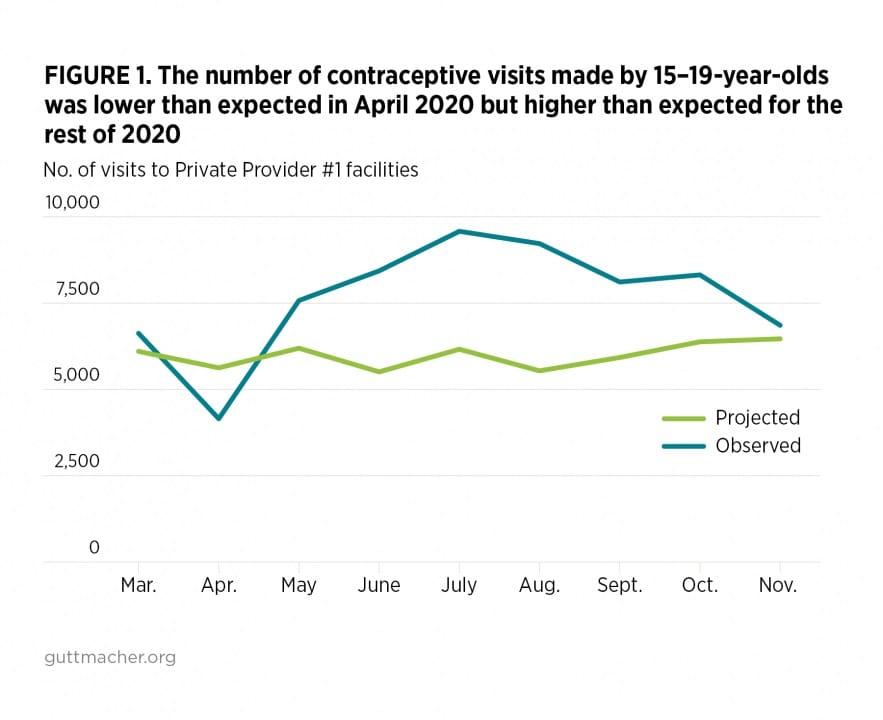
Data from the report showed an initial decrease in adolescent contraceptive visits at the start of the pandemic, with actual visits dipping far below the numbers projected for April 2020. However, adolescents’ visits for contraceptive services rebounded starting in May 2020 and continued to exceed projections through November 2020.
It was also noted that involving young people and communities in the efforts to promote sexual and reproductive health played an important role in advancing the efforts made by development partners while engaging key stakeholders in health promotion.
Overall, the data presented in the report shows the COVID-19 pandemic to have had minimal to no effect on adolescents’ access to family planning services in Uganda. HMIS data and those from private providers suggest a dip in access to some family planning services during April 2020, when a total lockdown was enforced.
Key points from the report
The COVID-19 pandemic and its associated restrictions raised concerns that adolescents in Uganda may face barriers to receiving family planning commodities and services, however, statistical data revealed that the country experienced smaller and shorter pandemic-related disruptions in adolescent access to sexual and reproductive health services than were initially anticipated.
The results speak to the resilience of the health system, which continued to provide services, and the impact of actions by partners to support access to reproductive health supplies and services.
The report also points out steps that the Ministry of Health and other stakeholders should take to ensure adolescents’ continued access to sexual and reproductive health services throughout the remainder of the pandemic:
- Document and foster the adaptions and processes that helped ensure continuity of services during the COVID-19 restrictions, so that similar measures may be adopted in future crises.
- Promote meaningful participation of young people in COVID-19 task forces, to ensure that relevant policies are gender-inclusive and respond to young people’s sexual and reproductive health needs.
- Classify contraceptive care as an essential service, integrate it with COVID-19 response interventions and ensure that it remains fully operational and open before, during and after any future lockdowns.
Those looking to dig deeper into the data and statistics presented by the report can do so by visiting this link. The report was compiled by the School of Public Health and College of Health Sciences from Makerere University, Guttmacher Institute, and Public Health Ambassadors Uganda (PHAU).
Also read: Laws Are Failing to Protect Women and Girls from Online Sexual Exploitation and Abuse